

All week I thought the Fourth of July fell on a Sunday.
It didn’t. It was Saturday. I checked repeatedly, the way you check the spelling of a word that has suddenly gone strange, and each time the answer slid straight back out of my head. The date sat there on every screen I own, and my brain declined to hold it.
Hold that thought. I promise it pays off in a way you won’t see coming.
I have severe dyscalculia. People assume that means being bad at maths. It’s stranger than that. I don’t merely mix numbers up; I don’t *understand* them the way you do. Dates, sums, sequences, addition, subtraction, percentages – they will not stay still long enough to be held. And yet I understand accounting and numeracy well enough to have built and run small & large companies – tens, at times hundreds, of millions in revenue – managing P&Ls and tracking unit economics. It arrives sideways, like art or music: ratios feel like bending notes, and my synaesthesia renders accounting as something language doesn’t truly reach – felt more than read, seen more than solved, almost architectural or sonic. (You’ll notice the spelling. I am culturally British, American by passport. Both count.) I *see* whether a business works long before I could recite the arithmetic underneath it.
But sms or call me with a six-digit security code and I will ask you to repeat it. Eight times. And likely still fail.
Under federal law, I am a disabled person… and that is before you count the ADHD I share with all three daughters and cPTSD.
The world is not built for brains like mine. It runs on the assumption that numbers are a stable, shared language. For millions of us they are not. So we route around it – and I have been routing around it, with machines, since I was a boy. AI has made the routing easier; frankly, it lets me do things I never dreamt possible. Being mildly eidetic helped.
At eleven I founded a BBS: a bulletin board system, a social network before the term existed. Not long after came my first PIM, running on a pocket computer called a Psion – the scion, as it happens, of what became Symbian, the operating system that ran most of the world’s smartphones until Android arrived and swallowed the market whole. (For years I would have sworn Symbian begat Android. It didn’t. My brain files lineages the way it files dates – neurodiversity for the win.)
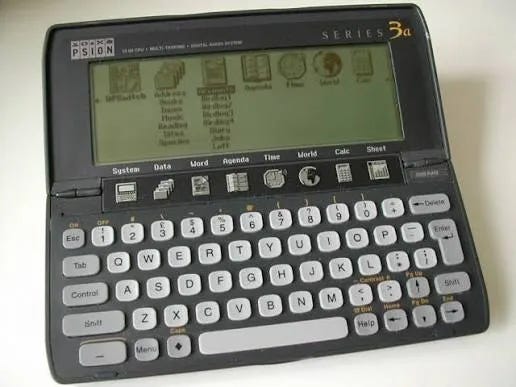
I didn’t buy it because I loved gadgets, although I did. I bought it because I could not remember a phone number. Or an address. And soon enough, not an email address either – this was the CompuServe era, when an email address *was* a number, a string of digits with a comma in the middle. For a dyscalculic child of the digital age, the universe had a sense of humour.
What I was assembling, though I couldn’t have named it then, was not merely external memory. It was an external processing and memory system – a second place to *think*, not just to store. The Commodore 64s and IBM PCs begat the Psion and its organiser kin, begat laptops and smartphones; the whole parade begat a forty-year habit of keeping half my mind in machines. Never a paper notebook – what would have been the point? Most people augment and extend their reach with technology by choice. Some of us do it to function.
Hold that thought too.
The company
Kimono, the company I founded in July 2024, turned two this week. I started it with two co-founders; both have since moved on – good humans, different paths, and real gratitude for what we built. My team is exceptional now, and we ship at a pace that would have read like science fiction eighteen months ago. That is the strange gift of this AI-extended-grasp era we’ve entered: a small team with good taste can now move like a large one.
It has been, without qualification, the hardest company I have ever started – and I have started rather a lot of them. Not because the technology is hard, though it is. Because for the longest stretch, almost nobody could see the world I could see. Three years ago, when I began describing an agentic future in which your AI would need to genuinely know your people – your relationships – in order to act on your behalf, the polite reaction was that I was early. The honest one was that I was nuts – or worse, building a glorified CRM.
It didn’t help, by the way, that every one of us carries somewhere between three and fifteen phone books across our computing devices – a mess of duplicates, dead entries, munged records, and doppelgängers – so we can never find the number to text someone when we’re running late. Or to wish them a happy birthday.
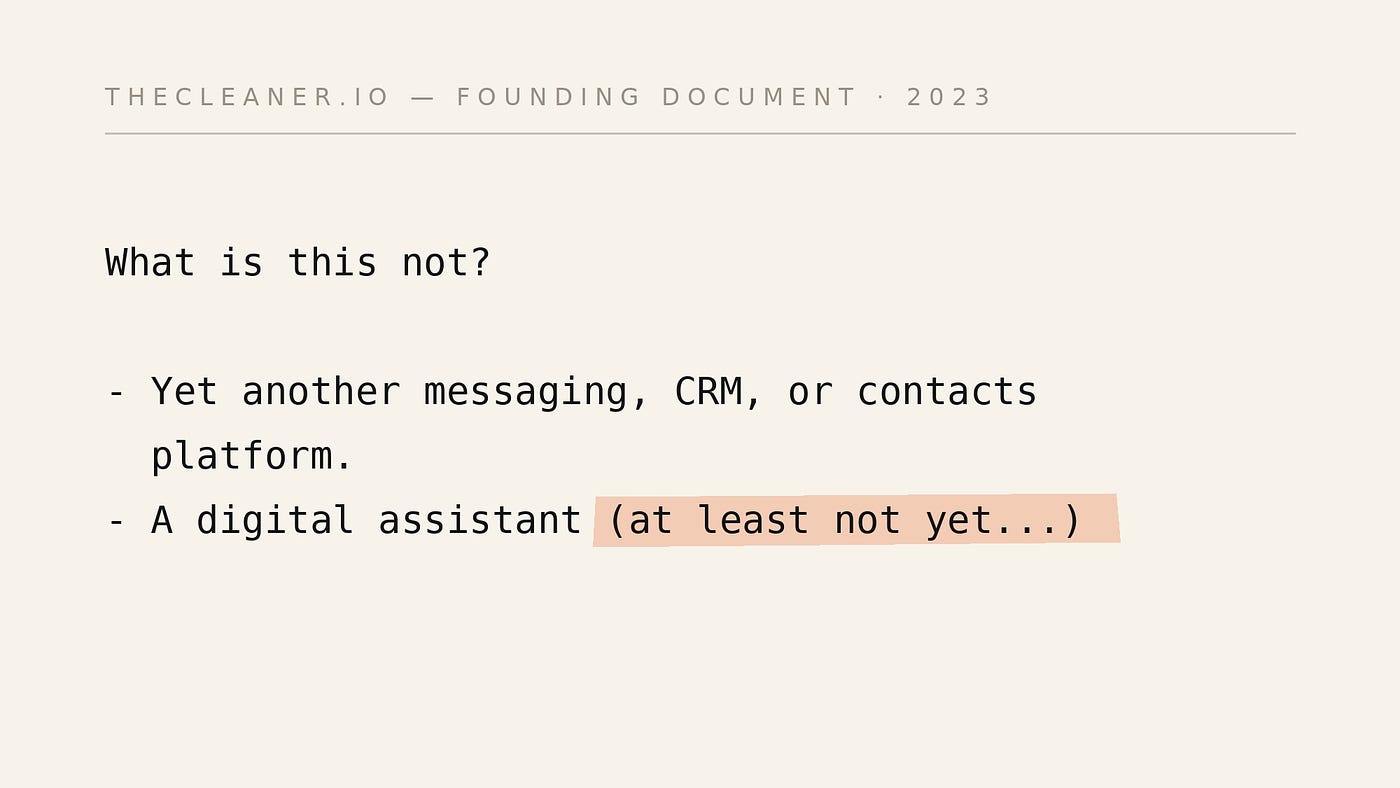
I reread Kimono’s founding document this week – written in 2023, before the company even had its name. It opens with a claim I would still defend under oath: *the only universal quality of the contact data on your devices, networks, and platforms is that it’s wrong.* And in the “what this is not” section sits a parenthesis that reads rather differently now: *not a digital assistant – at least not yet.*
The road from there was not straight. The first thing we actually built was, candidly, a poor man’s OpenClaw before OpenClaw existed – too early, and honestly not very good; nothing like what Peter Steinberger later shipped to GitHub. But we could see the future clearly enough to almost build it. Sometimes you are right – just early. So we pivoted – not away from the vision, but down to its foundation: the people layer underneath every agent anyone will ever ship.
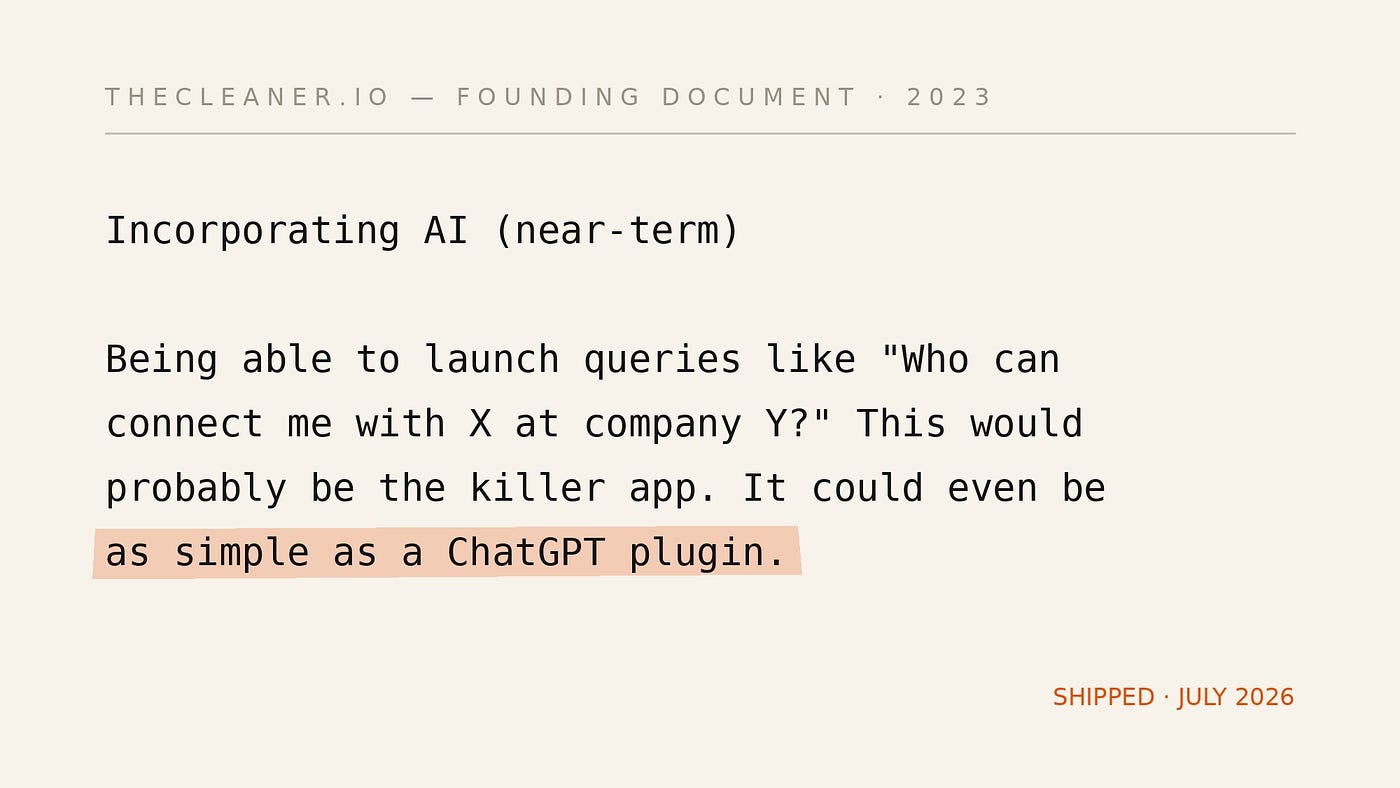
This week, two years in, we shipped Ask Kimono– and its agentic harness, Homunculus— wrapping multiple frontier models into one system that works on your behalf. Yes, it fixes your address book — but that is not what it is.
What it is: a privacy-first, user-sovereign-focused platform that knows everything about you and your people — who you know, what you know about them, what you’ve forgotten — so that you, and your agents, can answer the only question that matters: who can help me with this? Not just where someone works; LinkedIn can tell you that. Who in your actual life — across every platform, every device, every message thread real time when it matters— and the connection, the expertise, or the context you need right now. Your agents — Perplexity (my favourite), Claude, and ChatGPT included — will be able to draw on that graph directly when we ship our MCP later this month. On your instruction, revocable at any moment, private by design.
The full story of what shipped – and what’s coming behind it – deserves its own post, and it gets one later this week. The short version: we’ll be in the App Store in late summer or early autumn, we’re adding users to the beta every day right now, and there are 6,000 people on the waitlist – so if you’re game to test and help, join them. We are looking for intrepid souls to help test as we march to the store later this summer or early fall.
Now notice the shape of the thing. The BBS at eleven. The Psion. The PIM’s (personal information managers), TripIt – forty-odd years of external processing and memory. A man who cannot hold six digits has spent his whole life building machines that think and remember alongside him, and Kimono is simply the finished thought: the same system, at last, for everyone. Depending on how you count – and you already know how I feel about counting – it is my twentieth startup, if you’ll grant me the BBS and the computer lab I ran out of my dorm room and a few other edge cases. Cut me some slack on counting. The through-line is real.
Twenty beginnings. Some became Razorfish and Schematic; some became lessons. I built this last, hardest one in parallel with my divorce – (technically the dissolution of a domestic partnership and custody battle), which made everything more complicated and, given a massive income imbalance, much more unfair. Years and years of it, beginning in 2023, or was it 2022…. thank God its over now. Partway through, I parted ways with my attorney(s) who had failed me in ways both expensive and repeated – and I chose to finish the fight myself. In pro per. Disabled. Dyscalculic. I researched, drafted, and filed my own appeal to the California Court of Appeal – with AI as my paralegal, my clerk, and my second pair of eyes, and every citation verified by the human whose name is on the brief. The man who cannot read a calendar wrote an appellate brief. When I tell you this AI-extended-grasp era changes who gets access to justice, I am not theorising.
I don’t recommend running a startup in parallel with a divorce. But together they sharpened the only durable skill I own, and it isn’t grit. Resilience is the practised art of beginning again.
I learnt that somewhere specific. Hold that, one more time.
The Fourth
On the Fourth, Valentine – the youngest of the three daughters I have brought into this world – and I went to a water park and rode every slide. Every single one. We ate hot dogs and chicken tenders and fries. She wore the bikini we bought two years ago in optimistic anticipation of a growth spurt that has now, in earnest, begun. A small thing, a swimsuit finally fitting. It undid me slightly.
That evening we hiked to the top of the Baldwin Hills Scenic Overlook and watched the fireworks break across the whole basin – 360 degrees of Los Angeles going off at once. Snuggled in sweatshirts, she – who hates to hike – said: wow, Dad, that was worth it.
Later, lying in bed listening to Fast Car her favourite and – Coldplay by way of Sierra Eagleson’s cover of Viva la Vida, we agreed it was the best Fourth of July ever. Listen closely to what that last one is about – a king who lost his kingdoms and lived to sing about it – and you’ll understand why it was the right lullaby for this particular weekend. It and the one two years ago are two of the happiest memories I own, on a holiday that carries, for me, a great deal of freight.
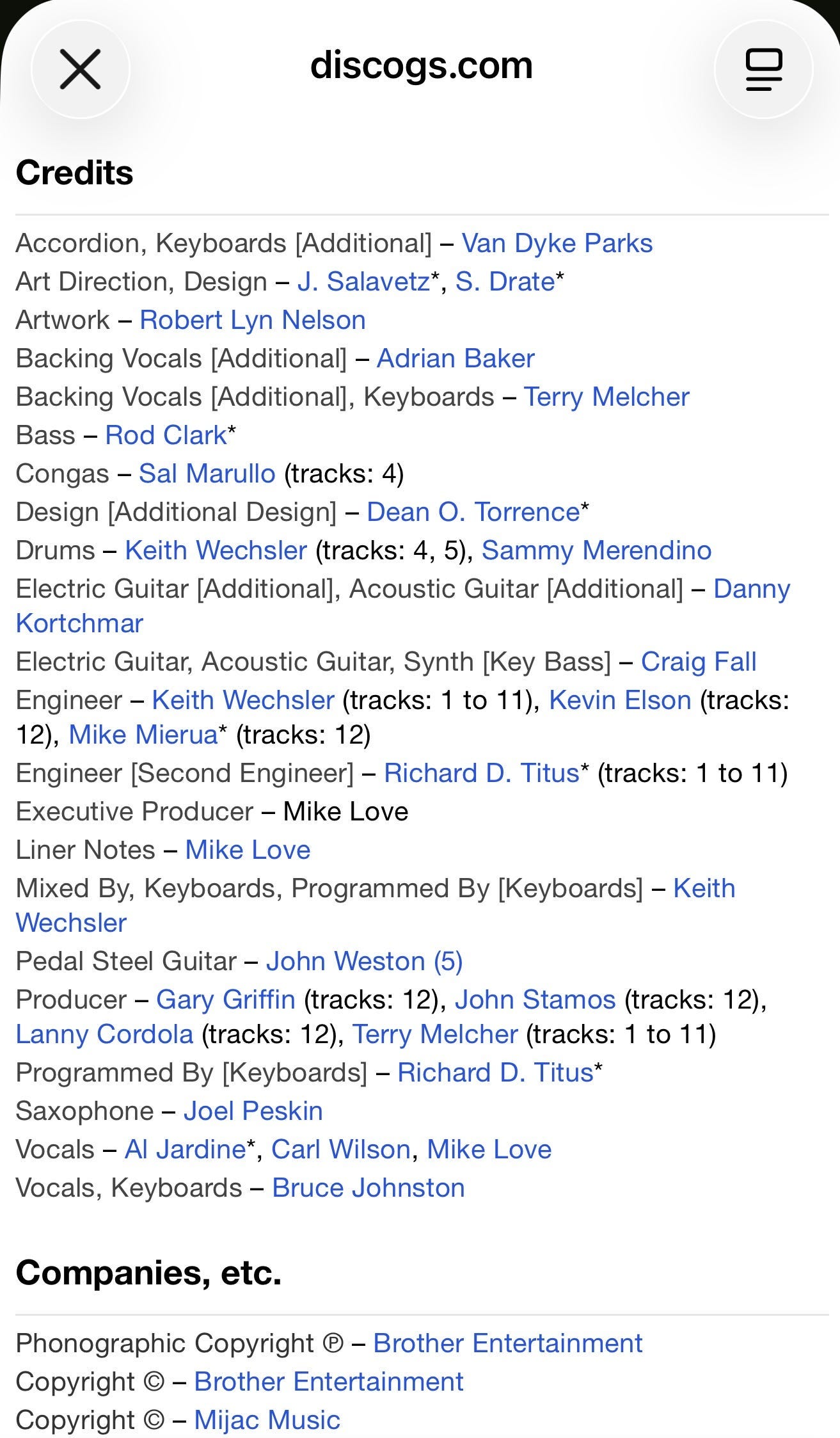
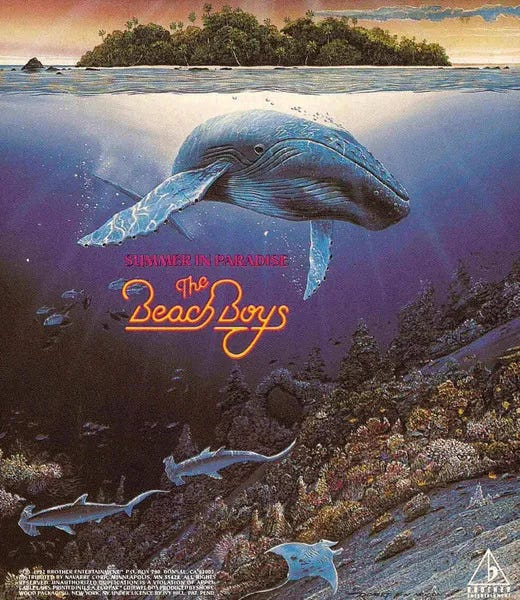
Some of that freight is lighter than the rest. For the years I worked for the Beach Boys — I engineered *Summer in Paradise*, their last studio recording, and the first record ever made on Pro Tools, then all of sixteen tracks — the Fourth of July meant two concerts a day.
They are at the Hollywood Bowl this very weekend, as it happens, still playing the holiday. Some traditions hold.
Here is where every thread ties off.
The date I cannot hold
The Fifth of July is my sober birthday. Thirty-four years – since 5 July 1992.
All week my brain refused to hold the Fourth, filing it again and again on Sunday. The Fourth fell on Saturday. The Fifth – the single most important date of my life – fell on the Sunday. My brain wasn’t confused. It was pointing. My own independence day, landing every year on the morning after everyone else’s, in the year the country turns 250.
The short version: after a wild final night of sex, drugs, rock and roll – and a moonlight motorcycle ride on Mulholland Drive, retrospectively not the worst but a solid entry in the collection of bad choices I was becoming expert at – I decided to change my life.
For a week. I decided, at first.
Five days later – after a detox I should absolutely have been in hospital for – I walked into my first log cabin meeting. I never left. I have never hidden my sobriety, and over the years many in music, film, and tech have come to me for advice, counsel, and fellowship. Always happily granted.
That is where the resilience actually comes from. Not the boardroom – the folding chair. Sobriety is the art of beginning again, practised daily, for thirty-four years. Every startup, every reinvention, every hard season since – the company nobody believed in, the divorce, the long years of being early – has drawn on that same muscle.
People are often surprised at how open I am about my sobriety, and about my disabilities. I learnt where the surprise comes from in a courtroom.
During my divorce I asked for one accommodation: accounting support for the financial portions of the case – the disclosures, the schedules, the arithmetic a family court runs on. Numbers, as you now know, are the one language I cannot speak. Two different family court judges – not one, two – refused. And worse than refused: the request was met with something closer to mockery, recast as a tactic – my errors read as dishonesty rather than inability. One judge remarked, more than once, that I had “chosen to revoke confidentiality,” as though dyscalculia were something to conceal. Something shameful.
Here is the part I cannot get past. Both judges held that I needed no support at all – whilst penalising me, ruling after ruling, for precisely the deficits the support would have addressed. You cannot be fine and punishable for the same condition in the same courtroom. And yet.
Just like sobriety used to be: the thing itself treated as the disgrace, the honesty about it treated as the confession.
Fuck that. Shame is a tax levied on honesty, and I stopped paying it thirty-four years ago.
The stigma is the disorder; the condition is just a condition. I am a founder with dyscalculia, ADHD, dyslexia, and cPTSD, thirty-four years sober, on my twentieth beginning, running a company whose entire premise is that trust survives transparency. I could hardly argue otherwise about myself. So I intend to speak about disability, and about sobriety, far more often. Consider this essay a beginning.
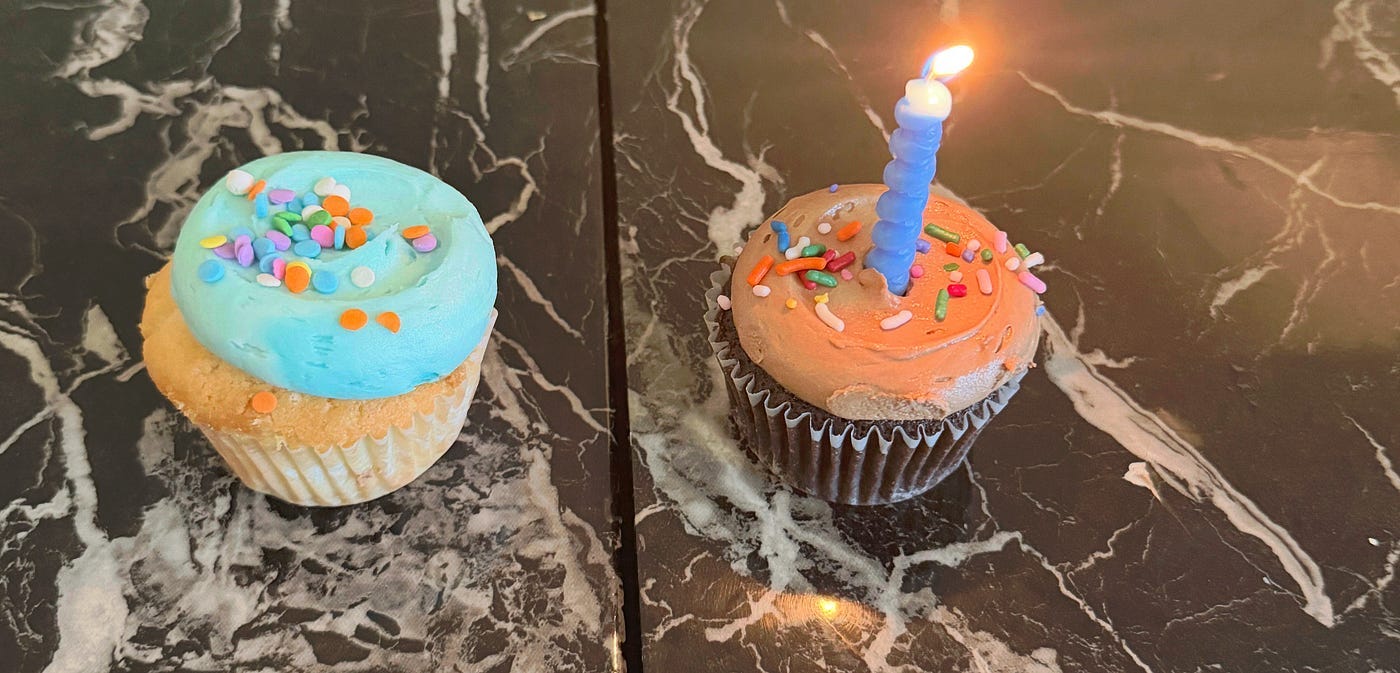
Because here is what sobriety is actually about – not the not-drinking, which is merely how it starts. Sobriety is about choosing life. I explained that to Valentine over breakfast this morning, and she considered it with the gravity only Valentine can summon, then announced: We have to get you a cupcake. As I write this, she is upstairs making me a bag & card to celebrate.
So this year I counted my independences – counting not otherwise being my strength. A country’s: 250. Mine: 34. A partnership ended – and in its place, bizarrely, a cold peace with Valentine’s Mother that, given the circumstances, counts as progress. A company, two years grown and finally seen. A little girl in a bikini we bought on faith, two years early – now upstairs with markers and a black paper bag full of stuffies she’s “giving me” for the day, celebrating the day her father chose life.
Newfound hope for the future. Deep gratitude for the past. A calendar I still cannot read – which, this week, cost me only a day.
We’re going to eat our cupcakes now.
Thank you, Richard, for the honesty and excellent storytelling that has allowed me to get to know you better. I hope I can return the favour one day.
This triggered some memories. I ran Channel 13 on Compuserve back in the day. Was a sad day when all those groups shuttered. We relocated to IRC but it was never quite the same.
I used to say I can still remember my Compuserve number, but it turns out some 30 years later, I can only remember some of it now :)