
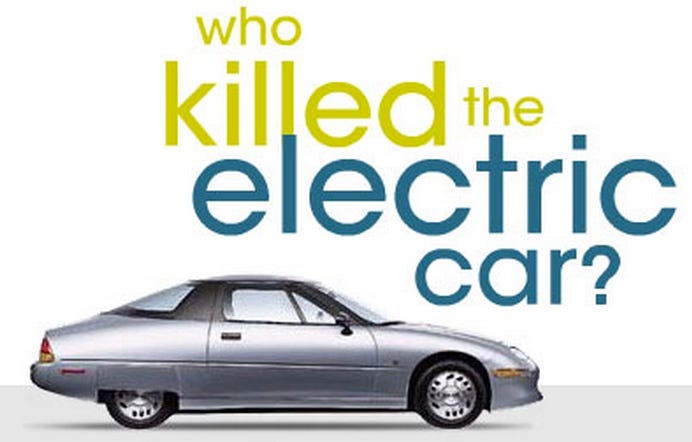
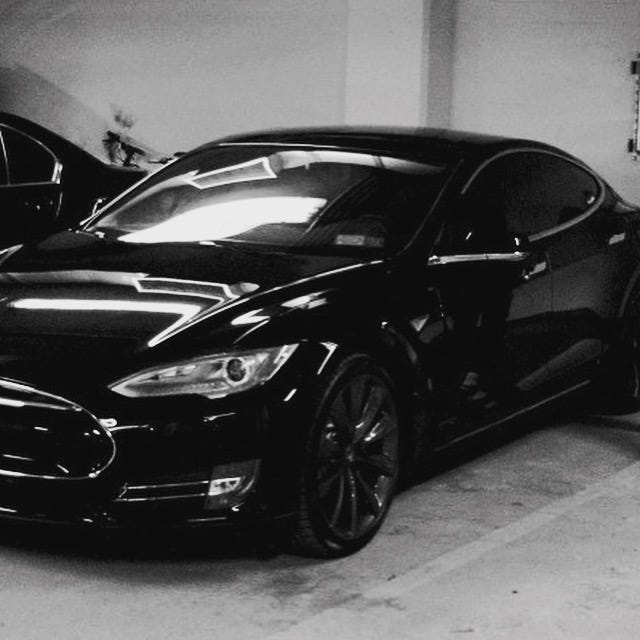
Twenty years ago, I executive produced Who Killed the Electric Car? with my first wife, Tavin, who was pregnant with Zoe, our 2nd daughter, our co-executive producer Dean Devlin, and our friend Chris Paine, who directed it. Jessie Deeter, my college friend and extraordinary documentarian, produced it. It remains one of the proudest achievements of my life, and that’s a life that’s had a fair number of things to be proud of. I’ve owned nothing but EVs (mostly Teslas) ever since — four of them in a row, until last week, when an accident caused by the floods in West Hollywood wrecked the favorite one I’ve owned, a 2018, pre-nanny cam Model S Platinum murdered out black on black.
So I’m car shopping again, properly, for the first time in years. And — hold that thought, because something else is colliding with it…. And next week for five days or so, I’ll be road tripping in a petrol car for the first time since 2008.
The Hollywood Reporter marked the film’s twentieth anniversary this week, which is as good an excuse as any to say what the film was actually about, and why it mattered as much as it did. In the 1990s General Motors built a genuinely good electric car, the EV1, leased it to a small, devoted following across Southern California under California’s zero-emissions mandate, and then, once the mandate loosened, took nearly all of them back and crushed them. People loved that car. People love EVs — that was never the mystery.
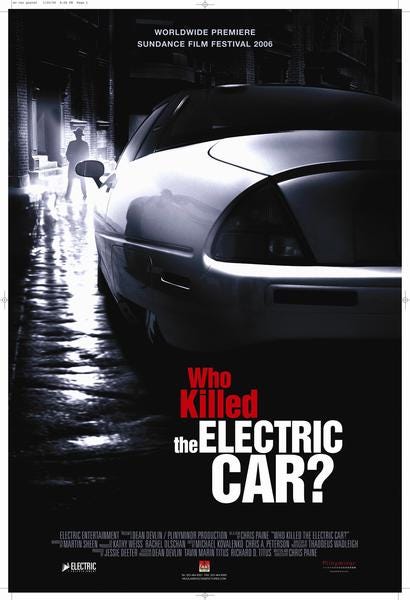
The real story is that we caught General Motors crushing and shredding EV1s out in the Arizona desert — cars with real waiting lists, destroyed on purpose once the mandate that forced GM to build them went away. Without that footage, this stays a footnote nobody outside Detroit ever hears about. Automakers, the oil industry, federal and California regulators, and plain consumer indifference all played a part in killing it. We just caught it happening. Years later Rick Wagoner, the GM CEO who presided over the crushing of the EV1, called it the biggest mistake of his career. I didn’t need to hear him say it.
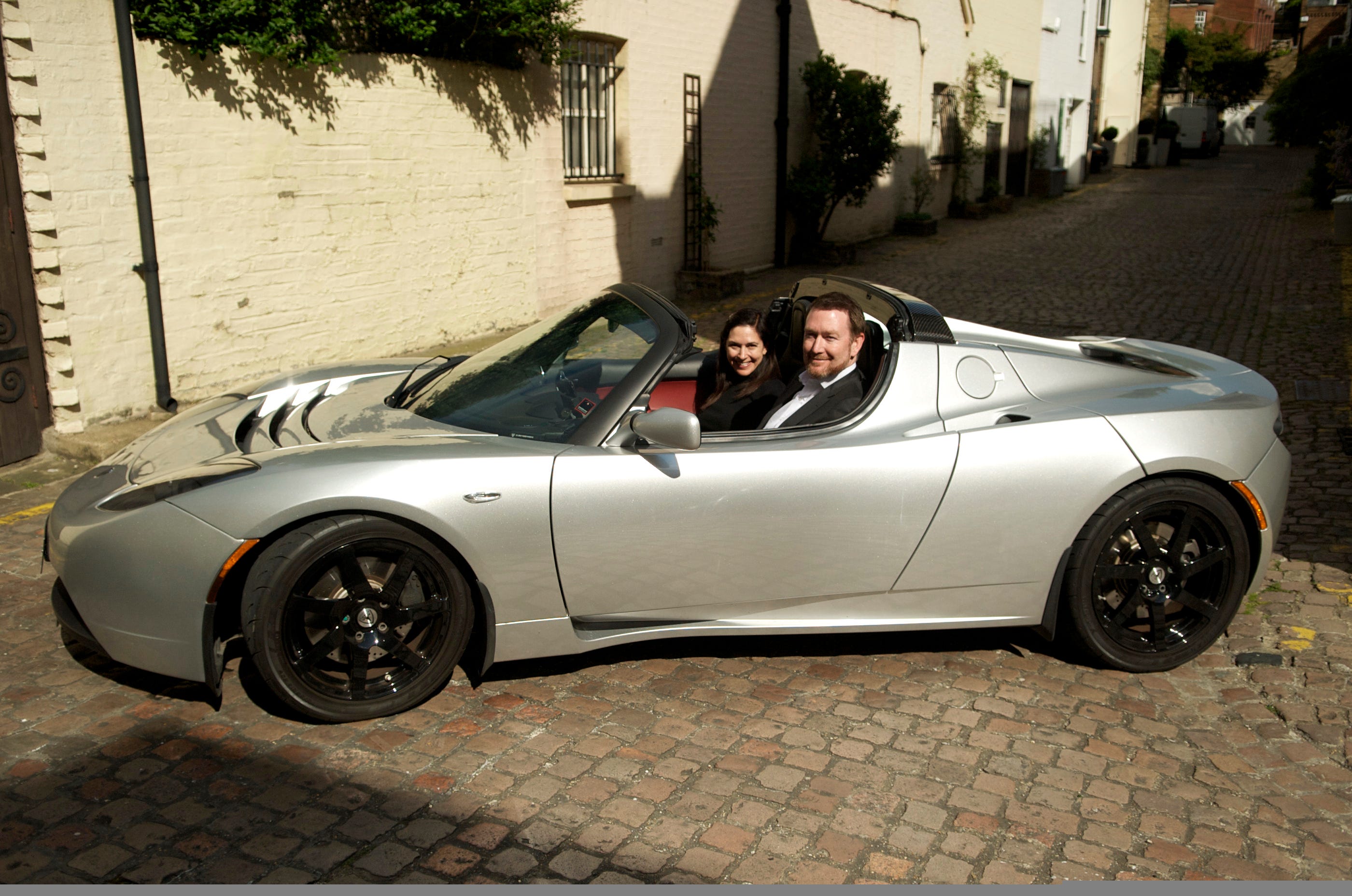
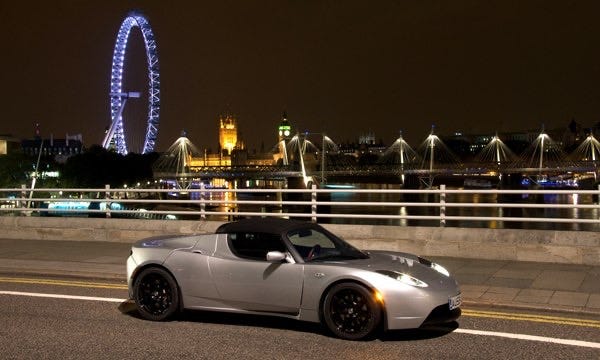
It mattered so much in 2006 because almost nobody believed electric cars were even possible. When I test drove a Tesla Roadster during production, my mind was blown. The received wisdom, inside Detroit and out, was that electric cars didn’t work, wouldn’t work, and that consumers didn’t actually want them — a story so complete that most people had no idea a car with real range and real devoted owners had already existed and been taken away from them, on purpose. An Inconvenient Truth came out the same year and did the work of making climate change impossible to ignore. We did the smaller, angrier job right next to it.
That’s the part that still matters twenty years on. The film got picked up by university classrooms across the country — environmental studies, political science, film programmes — and stayed there for years, shown to freshmen who’d never been told a technology could work perfectly well and still lose. A real slice of millennial and Gen Z climate and EV activism traces back to a dark lecture hall and ninety minutes of our film, including, it turns out, my own daughters. Isabella and Zoe grew up with it as ambient family history, the way other kids grow up with a parent’s old band posters — except this one actually did something. It helped make them who they are.
And yet most of the friends I have now have no idea I made it. Anyone who met me after the film — which, twenty years on, is nearly everyone — has no particular reason to know. It doesn’t come up over dinner. The thing that helped change how an entire generation thinks about cars and power and who gets to decide the future just quietly isn’t part of how most people around me understand who I am today. Which is truly odd. Here’s the actual thesis, twenty years on:
Art changes the world more effectively than war or politics ever manage to.
Politics moves people for a news cycle. War moves borders and grief. A film that lands in university classrooms and stays there for two decades moves how an entire generation thinks before they’ve even decided what they believe — that’s a longer lever than anything I’ve watched come out of Washington. Elon Musk has said, more than once, that Tesla exists because Detroit killed the electric car — the exact story we told. Al Gore told me something similar about what our film did that his couldn’t. We changed the world. Not alone, and without a trophy to show for most of it, but we changed it. Just a little bit.
I remember having lunch with Dylan Leiner from Sony Pictures Classics, pitching him at Cannes. Then I flew to Sundance with Dean, on his jet, with the wet film print no human had ever seen sitting in the seat beside us — there’d been an issue with the first print and we’d had to redo it. It was the literal first public screening of the film anywhere, an early rough cut, still drying, running temp music we’d change before the film went anywhere else. It got a standing ovation. I was astonished. I cried, Tavin cried, we were all mind-blown by the response.
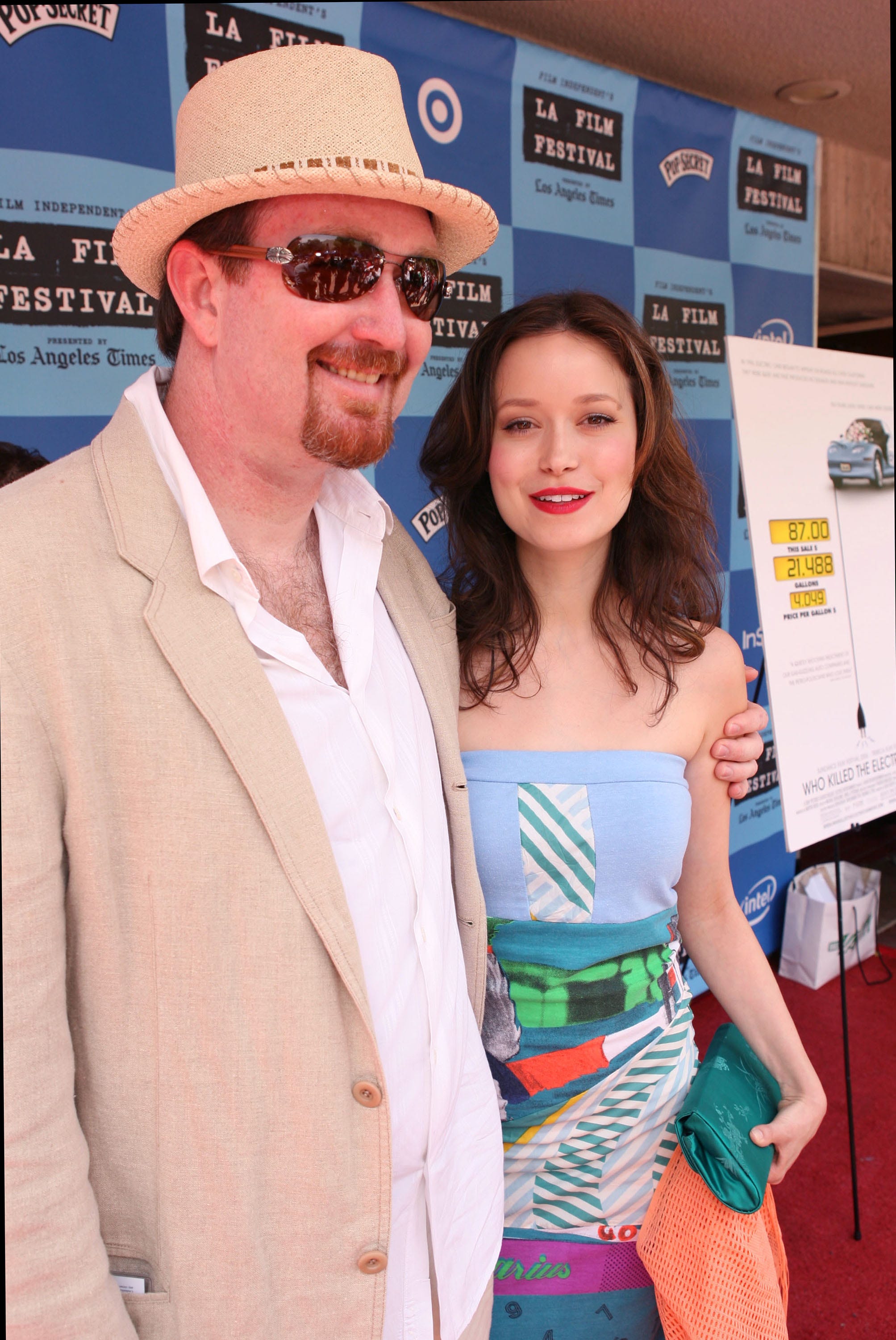
From there we recut a few times, and finally had a proper Los Angeles premiere ahead of what became the widest theatrical release any film of mine has ever gotten — a different event entirely, cleaned up, rescored, red carpet and sponsor step-and-repeat, Summer Glau standing next to me for the paparazzi photographers, several of whom I’d later go on to employ at the Daily Mail. Then came Sony Pictures Classics and a genuine run at the festival circuit: a Special Jury Prize at Mountain Film in Telluride, an Audience Award in Canberra, nominations from the Writers Guild, the Environmental Media Awards, and the Broadcast Film Critics Association. Most of what we didn’t win, we lost to An Inconvenient Truth — which is a respectable thing to lose to. No Oscar nomination, whatever I’ve apparently been telling people at dinner parties for twenty years — though the film is the reason I got invited to join the Academy in the first place. I already knew that too.
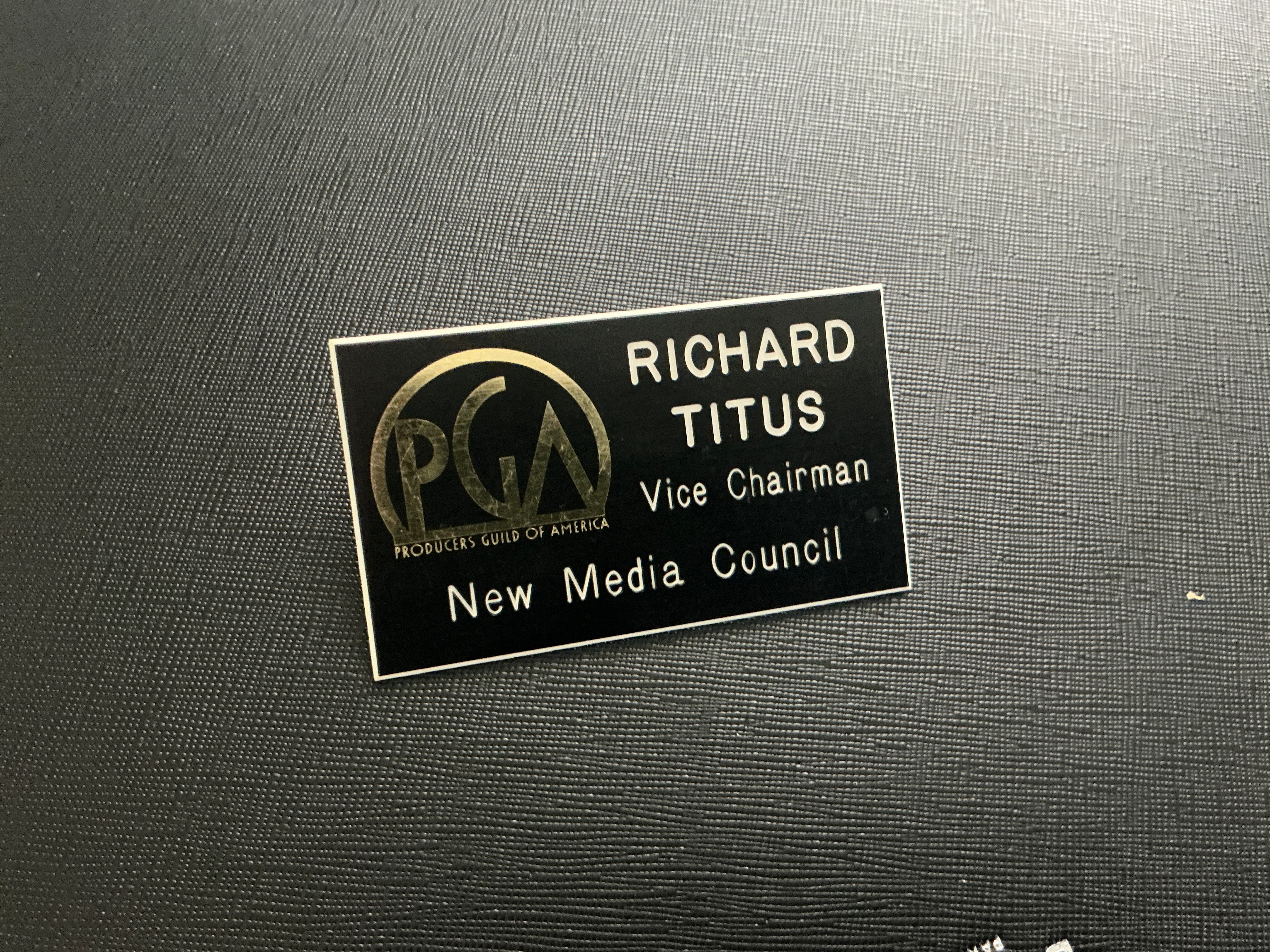
At the time I was also Vice Chairman of the Producers Guild of America — the guild for producers, helping lead its New Media Council — board seat, badge, award show committee dinners with starlets, the whole thing. Sadly, I let my membership in the PGA lapse at some point between divorces and moves in the subsequent years, and when I tried to rejoin, they wouldn’t let me back in. I still have the badge. Whether I find that frustrating, sad, or ironic depends on the day.
I’m proud of what we made — Tavin, who remains, all these years later, a genuinely good ex-business partner & wife to have; Chris, who created & directed it and lived inside this material longer than any of us; Jessie, my college friend who produced it and many many other films afterward; and me. Twenty years on, I think the film still holds up, which isn’t something I’d say about most of what I made in my 20’s and 30s. The original music supervision on the festival cut was all me, with a music editor watching the cut on the first flatscreen TV in my living room while I fed Zoe a bottle, which means I’m hopelessly partial to that soundtrack over whatever ended up in general release. Still love that RJD2 Smoke & mirrors track.
I live in West Hollywood now, which means I’m at some small film thing or other more weekends than not. Just Monday I went to a set of short film screenings at Petit Ermitage and fell in love with every one of them. But I haven’t actually stretched that creative muscle myself since The Electric Daisy Carnival Experience, the 2011 concert documentary about the dance music festival that I executive produced, which is fifteen years now and feels like it. Film is an extraordinary art form. I just found it a genuinely hard way to make a living.
There’s a scene in the sequel, Revenge of the Electric Car, where Elon is asleep on the factory floor, mid-crisis, trying to keep Tesla alive. My newest startup, Kimono, has felt like that some of these last few months — heads down, building, the kind of grind nobody sees from outside. Different company, different decade, same posture. EVs took twenty years to go from a radioactive idea to invisible infrastructure nobody thinks twice about anymore. I’m making the same bet with Kimono right now, while it’s still radioactive.
I could not have pictured, sitting in an edit bay twenty years ago, the Los Angeles I drive through now. There are more EVs on the road here every day — genuinely, visibly more, month over month, in a way you can watch happen from a stopped position at a red light. They aren’t a curiosity anymore. They’re just traffic. When I got my first electric car, a road trip meant real planning — where every charger was, how long each stop took, whether the next town had one at all, a spreadsheet before a suitcase. Now there’s a Tesla diner two minutes from my house, Superchargers pretty much everywhere you’d want one, and a road trip means picking a destination and letting the car tell you when to stop for coffee.
My reasons for staying electric aren’t political anymore either, which might be the real headline twenty years on. In 2008, owning an EV was a stance whether you wanted it to be or not — you were taking a side in an argument about oil and Detroit and who got to decide the future of the car. Today my reasons are economic, plus one that has nothing to do with money at all: I have a seven-and-a-half-year-old in San Diego I’m responsible for collecting every other weekend, three hours each way. And self-driving has become my must-have feature. It’s amazing — genuinely, not as a marketing line. Between that and the Superchargers, I have almost forgotten how to drive.
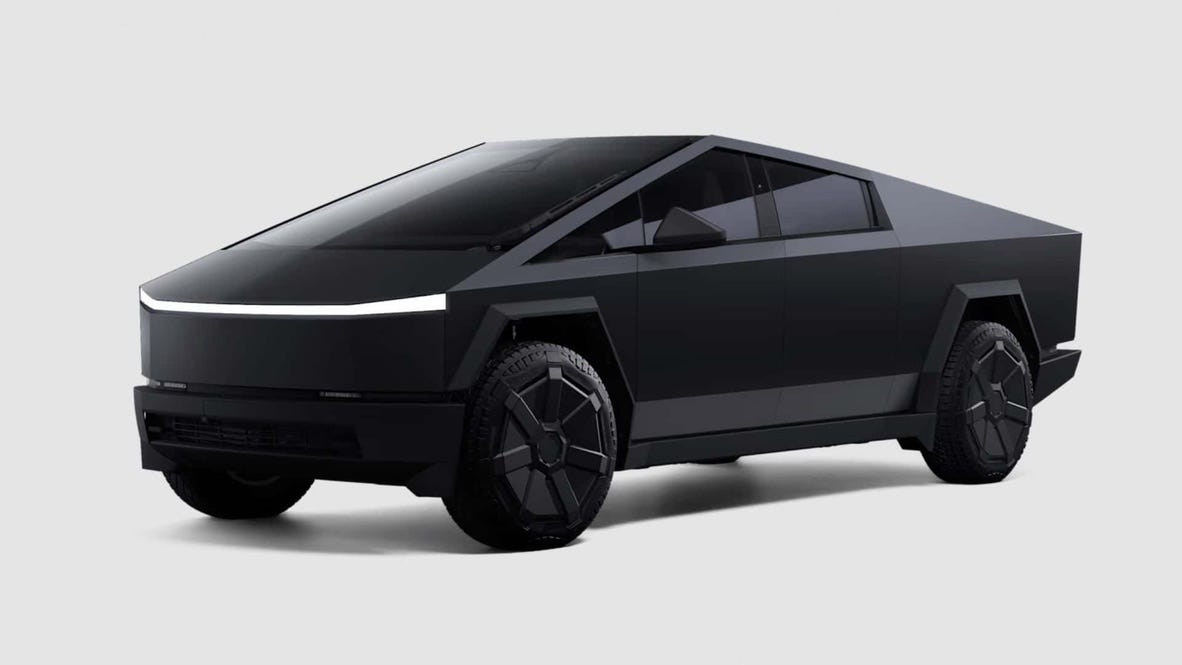
Which is a problem, because next week I have to remember. As I go looking for electric car number five, I’ve looked at the Rivian. I’ve looked at the Scout too, and I’m genuinely in love with it — but it isn’t ready yet, and the wait is too long for a man with no car. I’ve even looked, gulp, at Cadillac’s electric Escalade — proof of how far GM has traveled since the EV1. I’ll probably land back where I started: a new Model Y L, or another Model S, used — or if you have a Cybertruck you want to rent me for six months, I’m super game.
But that’s not the trip I mean.
Zoe, my twenty-year-old daughter, is moving from Boulder to Los Angeles this week, and next week she, her seven-and-a-half-year-old sister Valentine, and I are driving the whole way together — five days on the road, swimming pools wherever we can find them, a stop at Best Friends Animal Sanctuary, maybe some river rafting if we time it right — in a petrol car. It will be the longest I’ve driven a gas vehicle since 2008. Eighteen years is long enough to forget what an engine sounds like when it isn’t silent, what it’s like to watch a fuel gauge instead of a battery percentage, what it’s like to actually drive the whole way yourself instead of letting the car do most of it.
Twenty years ago we asked who killed the electric car and meant it as an accusation. This week the honest answer is nobody managed it, in the end. It just took the rest of us a while to catch up — and after eighteen years of it doing most of the work, I’m about to remember what driving used to feel like, somewhere on the road between Boulder and Los Angeles, with my two youngest in the car, one of whom exists in a world our film helped build and has no memory of the one before it.
Like this? Subscribe and share. Want to connect? Https://kimono.id/Titus-public